•
5 min read
How to Make a Weekly Meal Plan You'll Actually Follow
A practical approach to planning meals ahead, simplifying grocery shopping, and making healthier eating easier during the week.
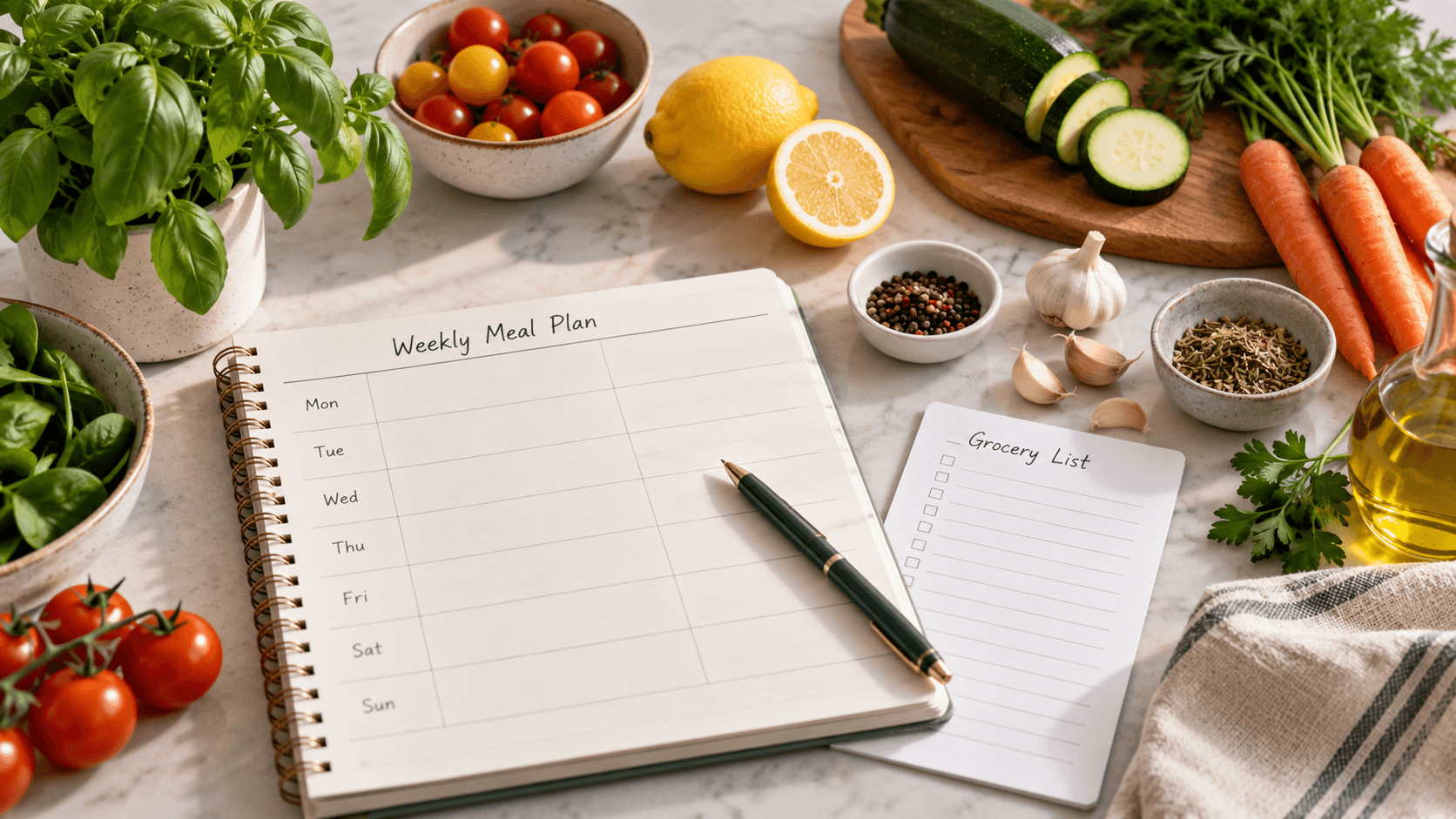
Meal planning sounds simple until real life gets involved. Plans change, schedules get busy, and suddenly the carefully planned dinner no longer feels realistic.
A good weekly meal plan should make life easier, not give you another set of rules to follow.
The key is to build a plan around the way you actually live.
Start With Your Real Week
Before choosing meals, look at the week ahead.
Which days will be busy? When will you have more time to cook? Are there evenings when you know you will arrive home late?
Planning around your schedule helps you avoid choosing meals that look good on paper but are unrealistic when the day arrives.
Save more involved recipes for quieter days and choose faster options for your busiest evenings.
Plan Fewer Meals Than You Think
You do not necessarily need seven completely different dinners every week.
Planning four or five main meals often gives you more flexibility. Leftovers, simple meals, or unexpected changes can fill the remaining days.
This also reduces the pressure to follow the plan perfectly.
A meal plan should guide you, not control you.
Choose a Few Reliable Meals
Having a small collection of dependable meals can make weekly planning much easier.
Think of recipes that use familiar ingredients, do not require complicated preparation, and can be adjusted depending on what you have available.
A simple grain bowl, vegetable soup, baked fish, bean-based dish, pasta with vegetables, or an easy sheet-pan dinner can all become useful starting points.
You can change herbs, vegetables, grains, or proteins to keep meals interesting without starting from zero every time.
Use Ingredients More Than Once
One of the easiest ways to simplify meal planning is to choose ingredients that can appear in several meals.
For example, roasted vegetables can be served as a side dish one evening, added to a grain bowl the next day, or used in a simple lunch.
Fresh herbs, cooked grains, beans, vegetables, and homemade dressings can often work across several recipes.
This helps reduce waste and makes grocery shopping more efficient.
Build Your Grocery List From the Plan
Once you know what you want to cook, create your grocery list directly from those meals.
Check your refrigerator, freezer, and pantry before adding anything to the list.
You may already have ingredients that can shape part of the week's plan.
Organizing the list by sections such as produce, proteins, grains, dairy, pantry items, and frozen foods can also make shopping faster and easier.
Prepare a Few Things Ahead
Meal preparation does not have to mean cooking everything on Sunday.
Even 20 or 30 minutes of preparation can make the week easier.
You might wash vegetables, cook a grain, prepare a simple dressing, portion snacks, or chop ingredients for the next day's dinner.
Small preparations remove friction when you are tired or short on time.
Keep an Easy Backup Meal
Even the best plan sometimes falls apart.
Keeping one or two simple backup meals available can prevent a busy evening from turning into a stressful decision.
Useful options might include frozen vegetables, no-salt-added beans, whole grains, eggs, simple pasta ingredients, or other foods you can turn into a quick meal.
The goal is not perfection. The goal is to make the easier choice available when you need it.
Give Yourself Permission to Change the Plan
A weekly meal plan is not a contract.
If Wednesday's dinner no longer works, move it to Thursday. If you have leftovers, use them. If plans change, adjust.
Flexibility is what makes a meal plan sustainable.
The best plan is not the one you follow perfectly. It is the one that continues to help you even when the week does not go exactly as expected.
The Bottom Line
Effective meal planning is less about creating the perfect schedule and more about reducing everyday decisions.
Start with your real week, choose a manageable number of meals, reuse ingredients, prepare a few things ahead, and leave room for change.
Over time, the process becomes faster and more natural—and healthier eating becomes easier to fit into everyday life.