•
10 min read
Low-Sodium Diet for Beginners: A Practical Guide to Getting Started
Learn how to start a low-sodium diet with practical food swaps, label-reading tips, meal ideas, and simple strategies for everyday life.

Starting a low-sodium diet can feel confusing at first. Sodium shows up in more places than the salt shaker, especially in packaged foods, sauces, prepared meals, restaurant dishes, and everyday staples.
The good news is that eating less sodium does not require making every meal bland or changing everything overnight. A practical approach starts with learning how to read labels, choosing lower-sodium versions of familiar foods, cooking with simple ingredients more often, and finding new ways to build flavor.
For most adults, the FDA Daily Value for sodium is 2,300 mg per day, although some people may be advised to follow a different target by their healthcare professional.
Quick start: focus first on the foods you eat most often. Compare their labels, make one or two lower-sodium swaps, and build from there.
What Is a Low-Sodium Diet?
A low-sodium diet is an eating approach that reduces the amount of sodium consumed from food and drinks.
Sodium itself is an essential mineral, but many packaged, prepared, and restaurant foods can contribute significant amounts to the diet. Reducing sodium is therefore about much more than simply putting away the salt shaker.
Fresh and minimally processed foods can make the process easier because you have more control over how much sodium is added during preparation.
The FDA uses 2,300 mg of sodium as the Daily Value for adults and children age 4 and older on Nutrition Facts labels. Your personal target may be different if a healthcare professional has recommended a specific sodium restriction.
How Much Sodium Should You Aim For?
For general label-reading purposes, the FDA Daily Value is 2,300 mg per day.
The DASH eating plan also uses a sodium limit of 2,300 mg per day, with a 1,500 mg version available for people following a lower-sodium DASH approach.
That does not mean everyone should automatically aim for 1,500 mg.
If your doctor, dietitian, or healthcare team has given you a specific sodium target, follow that individualized guidance rather than a general number found online.
How to Start a Low-Sodium Diet: 7 Simple Steps
1. Start Reading Sodium on Nutrition Labels
The Nutrition Facts label is one of the most useful tools for lowering sodium.
Before buying a packaged food, check the serving size, sodium in milligrams, the % Daily Value, and how many servings you will realistically eat.
The FDA considers 5% Daily Value or less per serving low and 20% or more high for an individual nutrient.
A food may not taste particularly salty and can still contribute a meaningful amount of sodium, so checking the number is more reliable than judging by taste.
2. Compare Similar Products
Two products that look almost identical can contain very different amounts of sodium.
Compare different versions of foods such as bread, canned beans, tomato products, broth, cereal, cheese, sauces, frozen foods, and condiments.
You do not necessarily need to eliminate a food you enjoy. Sometimes simply choosing the lower-sodium option can make a substantial difference across the day.
3. Build More Meals Around Simple Ingredients
Fresh fruits and vegetables, plain grains, fresh proteins, beans prepared without added salt, unsalted nuts, and other minimally processed foods can form the foundation of lower-sodium meals.
The more control you have over the ingredients, the easier it becomes to control the sodium.
Instead of trying to replace your entire diet at once, start with one meal you eat frequently and make that meal easier to manage.
4. Learn What Sodium Claims Actually Mean
Food-package claims can be useful, but they do not all mean the same thing.
Sodium-free: less than 5 mg of sodium per serving.
Very low sodium: 35 mg or less per serving.
Low sodium: 140 mg or less per serving.
Reduced sodium: at least 25% less sodium than the regular version.
Light in sodium: at least 50% less sodium than the regular version.
No salt added / Unsalted: no salt was added during processing, but the food may still contain sodium.
5. Rinse Canned Foods When Appropriate
Canned foods can still fit into a practical lower-sodium kitchen.
Look for no-salt-added or lower-sodium versions when available. For foods such as canned beans and vegetables, draining and rinsing can also reduce some of the sodium present.
The FDA recommends rinsing sodium-containing canned foods such as beans, tuna, and vegetables as one strategy for lowering sodium intake.
6. Build Flavor Without Relying Only on Salt
Low-sodium food does not have to taste flat.
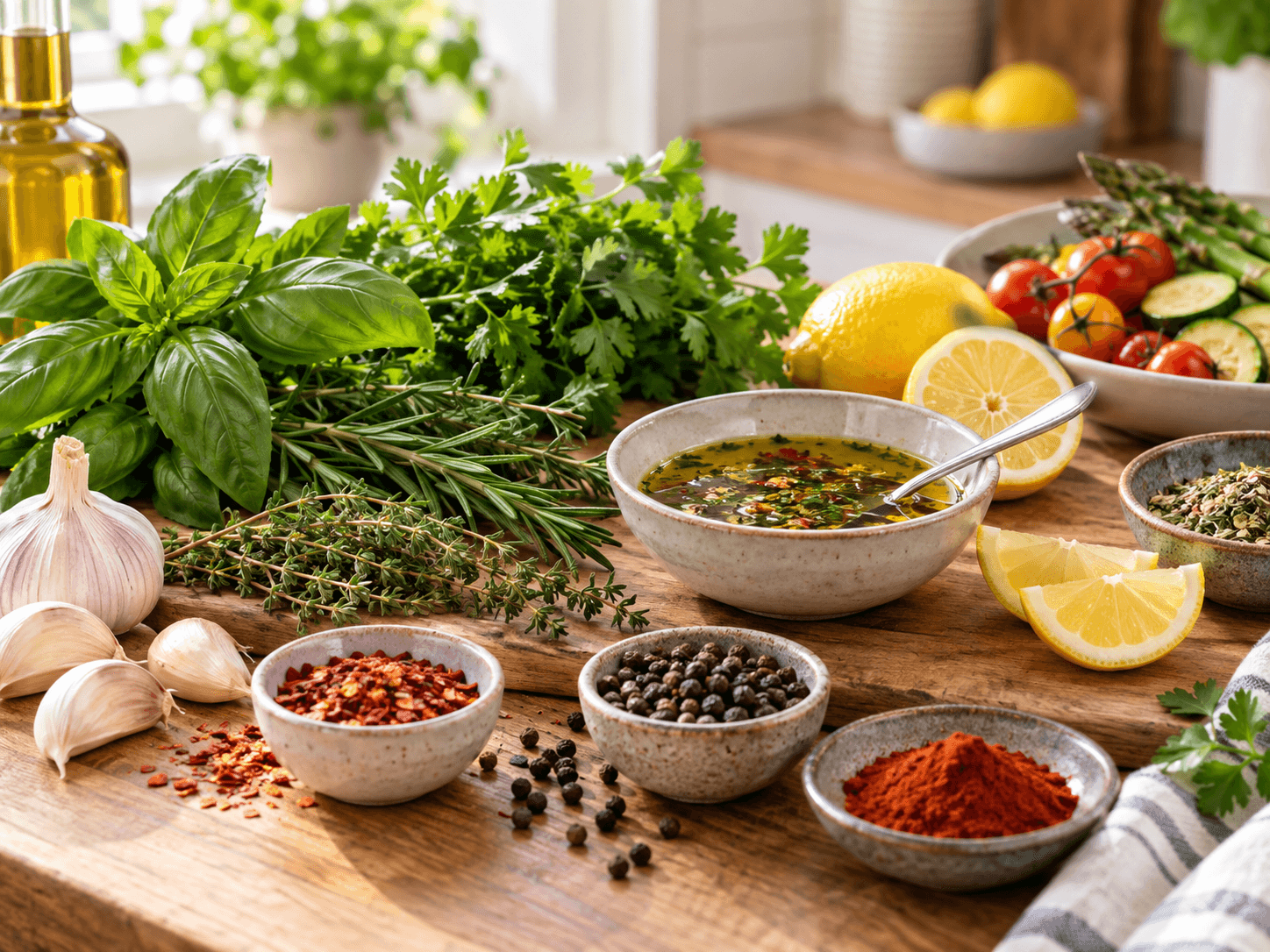
Try building flavor with ingredients such as garlic, onion, black pepper, paprika, cumin, rosemary, thyme, parsley, basil, lemon, lime, vinegar, ginger, and salt-free seasoning blends.
Acidity from lemon juice or vinegar can make flavors feel brighter, while herbs and spices add aroma and complexity.
7. Plan Ahead When Eating Away From Home
Restaurant meals can be harder to control because much of the sodium may already be present in sauces, seasonings, marinades, and prepared ingredients.
Helpful strategies include asking for:
no extra salt when possible;
sauces and dressings on the side;
simply prepared grilled, baked, steamed, or roasted foods;
nutrition information when available.
You do not have to stop eating out. The goal is to make the sodium easier to see and manage.
What Can You Eat on a Low-Sodium Diet?
A practical low-sodium diet can still include a wide variety of familiar foods.
Fruits and vegetables: fresh fruit, fresh vegetables, plain frozen vegetables, and no-salt-added canned options.
Grains and starches: oats, brown rice, quinoa, barley, potatoes, pasta, and other grains prepared without heavily salted sauces or seasoning packets.
Protein: fresh poultry, fish, eggs, beans, lentils, tofu, and fresh meats, while checking packaged products for added sodium.
Dairy: milk, yogurt, and cheeses can fit, but sodium varies considerably between products, so compare labels.
Fats and flavor: olive oil, vinegar, lemon, lime, herbs, spices, and unsalted nuts or seeds.
The important idea is not to memorize a giant “allowed and forbidden” food list. Learn how the food was prepared and check the sodium when a label is available.
Foods That Can Add Sodium Quickly
Some foods deserve extra attention because sodium can accumulate quickly.
Common examples include processed meats, canned soups, packaged sauces and mixes, instant noodles or flavored grains, salty snacks, pickled foods, condiments, frozen prepared meals, and restaurant foods.
This does not automatically mean every product in those categories must be avoided. Sodium can vary dramatically by brand and serving size.
The label is what tells you whether a particular product fits your day.
A Simple Low-Sodium Day for Beginners
You do not need an elaborate meal plan to begin.
Breakfast: oatmeal with berries, cinnamon, and unsalted nuts.
Lunch: grilled chicken or chickpeas with mixed greens, cucumber, tomato, olive oil and lemon, served with a plain whole grain.
Snack: fresh fruit with unsalted nuts or plain yogurt.
Dinner: baked salmon or another simple protein with brown rice, roasted vegetables, garlic, herbs, and fresh lemon.
The exact sodium content will depend on the brands, portions, and ingredients you use, so this example is intended as a practical meal framework rather than a fixed-sodium meal plan.
Common Low-Sodium Mistakes to Avoid
Assuming “Reduced Sodium” Means “Low Sodium”
“Reduced sodium” does not mean the same thing as “low sodium.”
A reduced-sodium product contains at least 25% less sodium than the regular version, but it can still contain a substantial amount of sodium.
Always check the Nutrition Facts label rather than relying only on the claim on the front of the package.
Ignoring Serving Size
Sodium on the Nutrition Facts label is listed per serving.
If a food contains 400 mg of sodium per serving and you eat two servings, you have consumed 800 mg.
Always look at the serving size together with the sodium amount.
Focusing Only on the Salt Shaker
Using less table salt can help, but sodium also comes from packaged foods, sauces, condiments, prepared meals, and restaurant foods.
A practical low-sodium approach looks at the entire eating pattern rather than focusing on one ingredient.
Assuming “No Salt Added” Means Sodium-Free
“No salt added” means salt was not added during processing.
The food may still contain naturally occurring sodium or sodium from other ingredients, so check the Nutrition Facts label.
Using Potassium-Based Salt Substitutes Without Checking First
Some salt substitutes replace sodium with potassium.
They may not be appropriate for everyone, particularly people with kidney disease or those taking certain medications that affect potassium levels.
If this applies to you, check with a healthcare professional before using a potassium-based salt substitute.
How Does a Low-Sodium Diet Fit With the DASH Diet?
DASH stands for Dietary Approaches to Stop Hypertension.
It is a broader eating pattern built around foods such as fruits, vegetables, whole grains, low-fat dairy, beans, nuts, fish, and poultry while limiting foods high in saturated fat, sugary drinks, and excess sodium.
The DASH plan does not require special foods and can be followed with a sodium target of 2,300 mg or a lower 1,500 mg version.
A low-sodium diet and the DASH diet can overlap, but they are not exactly the same thing. A low-sodium diet focuses specifically on sodium intake, while DASH is a broader eating pattern.
When Personalized Guidance Matters
A general beginner guide cannot determine the right sodium target for every person.
If you have been given a sodium restriction because of a medical condition, take medications that affect electrolytes, have kidney problems, or have been instructed to follow a particular therapeutic diet, use the target provided by your healthcare team.
This article is intended as general educational information and not as individualized medical advice.
Frequently Asked Questions About Starting a Low-Sodium Diet
What Is Considered a Low-Sodium Food?
Under FDA labeling rules, a food labeled “low sodium” contains 140 mg of sodium or less per serving.
Is “No Salt Added” the Same as Sodium-Free?
No. “No salt added” means salt was not added during processing. The food may still contain sodium, so always check the Nutrition Facts label.
Can Low-Sodium Food Still Taste Good?
Yes. Herbs, spices, garlic, citrus, vinegar, and other flavor-building ingredients can add complexity without relying heavily on salt.
Do I Have to Stop Eating at Restaurants?
No. You can ask for sauces and dressings on the side, request no extra salt when possible, choose simply prepared dishes, and check available nutrition information.
Start With Small Changes You Can Repeat
A low-sodium diet becomes much easier when you stop trying to change everything at once.
Start with the foods you buy most often. Compare labels. Replace a few high-sodium staples. Cook one or two simple meals at home. Experiment with herbs, spices, and acidity.
Those small choices can gradually turn low-sodium eating from something restrictive into a normal part of everyday life.
Looking for more practical ideas for healthier everyday eating? Explore Theodora Parham’s cookbooks and practical guides.